

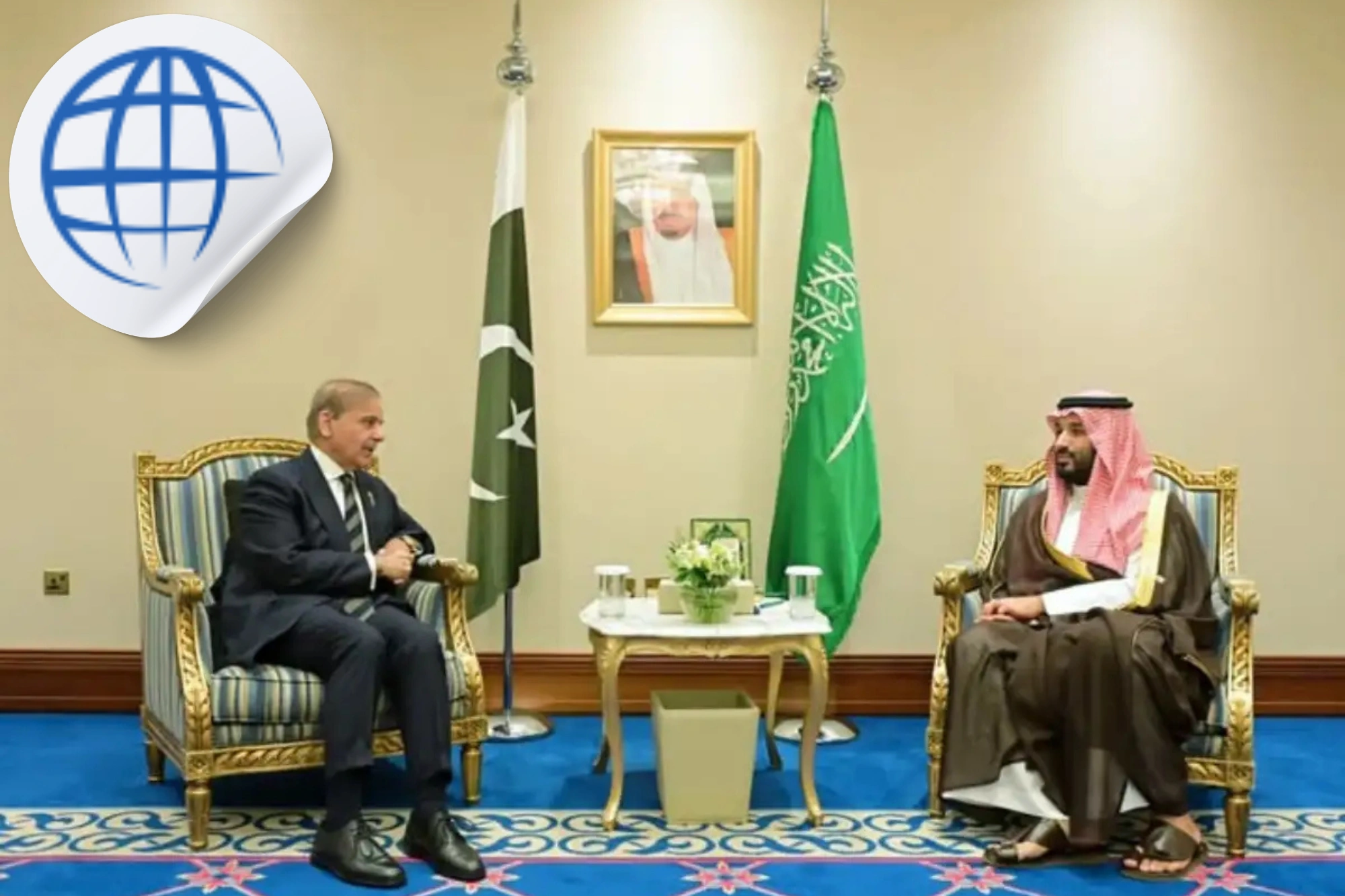

Pakistan and Saudi Arabia Sign Historic Defence Pact Amid Regional Tensions
Islamabad, Pakistan – In a highly symbolic and strategic development, Pakistani Prime Minister Shehbaz Sharif was welcomed with full royal honors in Riyadh — including a Saudi F-15 fighter jet escort and red carpet reception — to formally sign a Strategic Mutual Defence Agreement (SMDA) with Saudi Crown Prince Mohammed bin Salman.
This landmark accord marks a significant milestone in the nearly 80-year-old relationship between Pakistan and Saudi Arabia — two nations that have long shared close political, religious, and military ties.
The signing ceremony, held at the Royal Court of Al-Yamamah Palace, was attended by top officials from both countries. For many observers, the agreement signals a new chapter in the regional balance of power, particularly in light of recent geopolitical upheavals.
Defence Pact Amid Rising Instability
The timing of the agreement is critical. It follows two years of regional unrest, intensified by Israel’s aggressive military campaigns, including a controversial strike on Doha, Qatar’s capital, just days ago. The Middle East is witnessing a shift, as traditional US allies in the Gulf question the reliability of American security guarantees.
The deal also comes on the heels of a dangerous four-day conflict between India and Pakistan in May, when both countries exchanged missile and drone strikes on military installations. Tensions remain high between the two nuclear-armed neighbors.
According to Pakistan’s Ministry of Foreign Affairs, the defence pact reflects a “mutual commitment to regional stability” and a “joint deterrence strategy” against external threats. Notably, the agreement includes a clause stating that any aggression against one party will be considered an aggression against both.
Strategic Recalibration in the Gulf
Analysts view this agreement as a game-changer. Asfandyar Mir of the Stimson Center called it a “watershed moment,” noting that Pakistan, while deeply tied to China in defence cooperation, has never signed a formal mutual defence treaty — until now.
South Asia analyst Muhammad Faisal suggested the pact could become a model for similar agreements between Pakistan and other Gulf nations like Qatar and the UAE, both of whom face increasing security anxieties.
“This deal will formalize and expand existing defence collaboration, potentially involving joint training, weapons production, and a larger Pakistani troop presence in Saudi Arabia,” Faisal said.
A Longstanding Alliance Reinforced
Saudi Arabia was among the first countries to recognize Pakistan after its independence in 1947. Their first “Treaty of Friendship” in 1951 laid the foundation for decades of strategic cooperation. Since then, over 8,000 Saudi military personnel have been trained by Pakistan, and Pakistani troops have been regularly deployed in the kingdom.
The SMDA builds on that legacy, but in a rapidly evolving security environment — especially as Israel’s strikes in the region rattle Gulf nations, and the US presence in the Middle East becomes more complicated due to shifting alliances and public sentiment.
The Nuclear Question
Speculation around Pakistan’s nuclear capability playing a protective role for Saudi Arabia has resurfaced. Although the SMDA does not explicitly mention nuclear cooperation, past statements — including one attributed to Crown Prince Mohammed bin Salman — hint at Saudi interest in Pakistan’s nuclear deterrent as a strategic backup, should the region’s instability spiral further.
However, analysts caution that there is no official provision for a nuclear umbrella. Security expert Sahar Khan emphasized that while the pact is politically significant, it lacks explicit terms regarding nuclear commitments.
India and Iran Watch Closely
India, unsurprisingly, is watching this development with concern. The Indian Ministry of External Affairs confirmed it is evaluating the pact’s implications for national and regional security.
Meanwhile, Iran — a neighbor to both countries and often at odds with Saudi Arabia — could interpret this pact as a tilt against its influence. Analysts warn that Pakistan risks being drawn into Gulf rivalries, while Saudi Arabia could find itself entangled in Pakistan’s disputes with India or Afghanistan.
A Turning Point
Despite unanswered questions about the full scope of the agreement, most analysts agree on its significance.
“This is more than symbolism,” said Mir. “It’s a strong message to adversaries and allies alike that Pakistan and Saudi Arabia are deepening their strategic alignment.”
Whether the pact evolves into a more comprehensive military alliance or remains a political statement, it undoubtedly reshapes the security dynamics of South Asia and the Gulf.
Permalink
Permalink