

Only 47% of Pakistanis have access to safe drinking water
When Clean Water Is a Privilege: Pakistan’s Silent Drinking Water Crisis
Water is something most people reach for without thinking. A glass from the tap, a bottle from the fridge, a sip before leaving home. But in Pakistan, for more than half the population, clean drinking water is not guaranteed. It is uncertain, unsafe, and in many cases, dangerous.
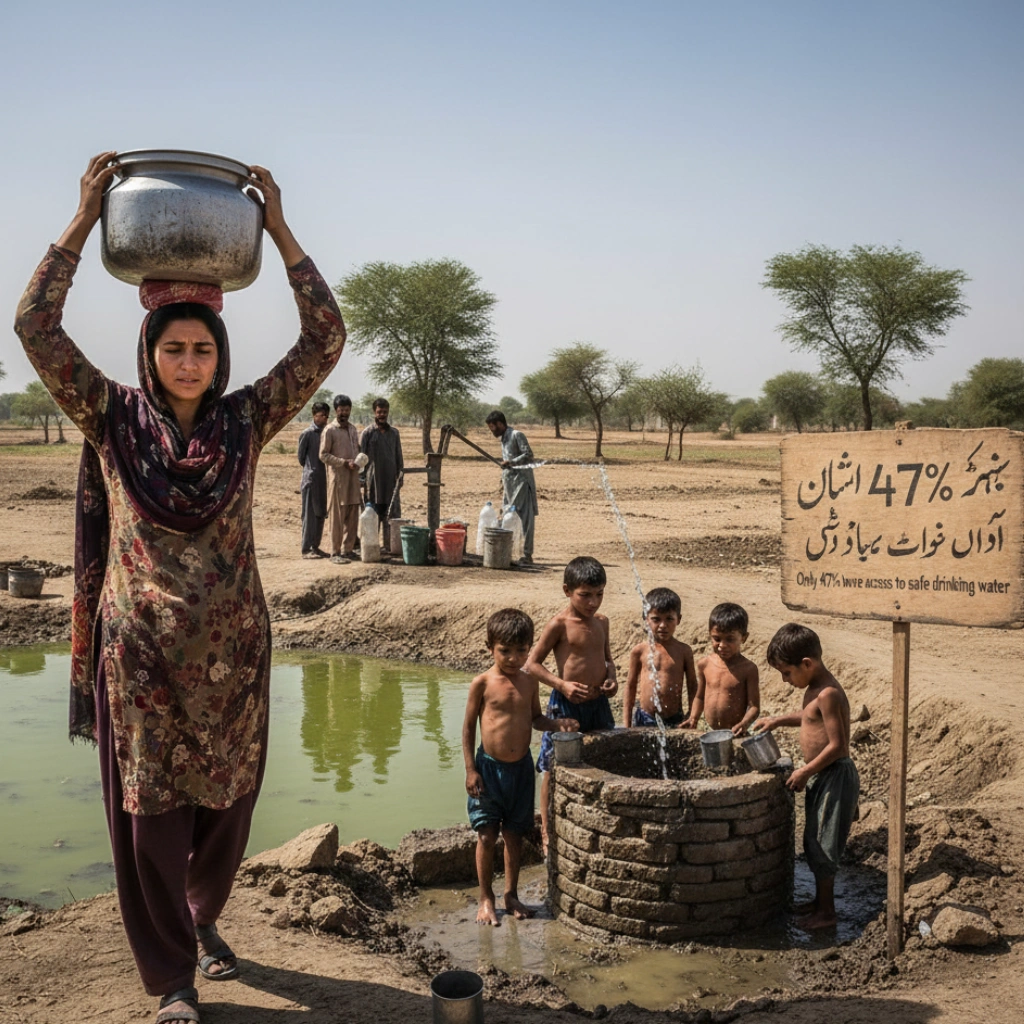
Today, only 47% of Pakistanis have access to safe drinking water. This single statistic exposes a national crisis that affects health, education, productivity, and dignity — yet it rarely receives the urgency it deserves.
A Daily Struggle Hidden in Plain Sight
In cities, people boil water or rely on expensive bottled supplies. In villages, families walk long distances to fetch water from hand pumps, canals, or wells that look clear but carry invisible threats. What unites both urban and rural Pakistan is the reality that water quality is rarely trusted.
Many households consume water knowing it may cause illness, but with no affordable alternatives, they accept the risk. Over time, this silent compromise has turned into a public health emergency.
Why Safe Water Is So Scarce
Pakistan is not short of water by geography alone. The problem lies in mismanagement, pollution, and neglect.
Pollution Without Accountability
Untreated sewage flows directly into rivers. Industrial waste is dumped into canals. Agricultural runoff filled with pesticides seeps into groundwater. In many areas, arsenic and bacterial contamination exceed safe limits, especially in Sindh and southern Punjab.
Shockingly, only a small fraction of wastewater in Pakistan is treated before being released back into the environment.
Population Pressure and Poor Infrastructure
As the population has grown rapidly, water systems have failed to keep pace. Old pipelines leak, filtration plants stop working due to lack of maintenance, and new housing developments often have no proper water planning at all.
Climate Change Making Things Worse
Floods contaminate clean water sources, while droughts dry them up entirely. Rising temperatures increase evaporation and reduce freshwater availability. Climate change is not a future threat for Pakistan — it is already shaping the water crisis.
The Human Cost of Unsafe Water
- Unsafe drinking water does not just make people sick; it keeps them trapped in cycles of poverty.
- Thousands of children die each year from preventable waterborne diseases
- Diarrhoea, typhoid, hepatitis, and stomach infections are widespread
- Children miss school due to illness
- Families spend large portions of income on medical treatment
- Malnutrition and stunting increase due to repeated infections
- For many families, sickness caused by contaminated water is so common that it is treated as normal — which makes it even more dangerous.
An Economic Drain on the Country
The water crisis quietly damages Pakistan’s economy. When people are sick, they cannot work. When children miss school, future productivity suffers. Healthcare costs rise while national output falls.
Experts estimate that billions of rupees are lost every year due to water-related diseases and inefficiencies. Ironically, investing in clean water systems costs far less than treating the damage caused by neglecting them.
Is There Any Hope?
Yes — but only if action replaces awareness.
Some communities have shown that progress is possible. Small-scale filtration plants, when properly managed, provide reliable clean water. Metered water supply systems reduce waste and improve sustainability. Education campaigns help households protect themselves through simple practices like safe storage and boiling.
However, these efforts remain scattered. Without strong governance, proper funding, and long-term planning, they cannot reach the millions who still rely on unsafe sources.
What Needs to Change
To move beyond this crisis, Pakistan must treat clean drinking water as a national priority, not a side issue.
This means:
- Enforcing laws against industrial and sewage pollution
- Repairing and expanding water infrastructure
- Investing in water treatment rather than temporary fixes
- Involving local communities in water management
- Planning for climate resilience, not reacting to disasters
- Most importantly, access to clean water must be recognized as a basic right, not a luxury for those who can afford bottled alternatives.
Conclusion
The fact that only 47% of Pakistanis have access to safe drinking water is not just a statistic — it is a reflection of inequality, neglect, and missed priorities. Water should never be a gamble with health or survival.
If Pakistan is serious about development, education, and economic growth, it must start with the most basic need of all: safe water for every citizen.
Until then, millions will continue to drink water that harms them — simply because they have no other choice.